My relationship with the Colombian Andes is not purely one of landscape: it is affective, political, and inherited. I come from a peasant heritage that taught me, from a very early age, to see the mountain not as a distant backdrop, but as a living being that nurtures, feeds, and also calls for care. I grew up understanding the land as labor, as sustenance, and as shared memory.
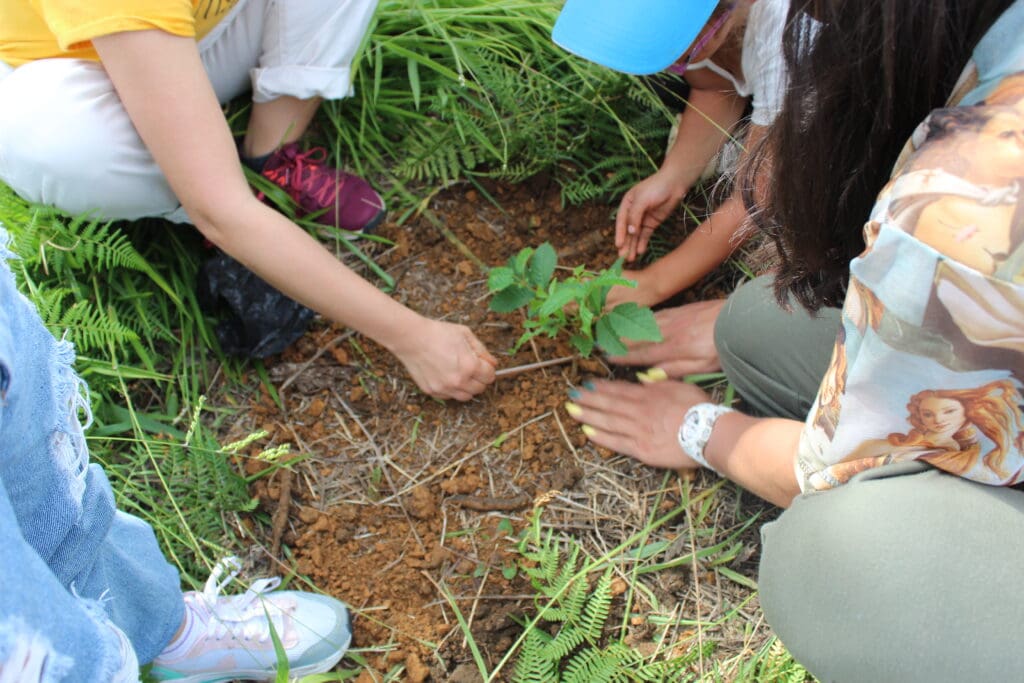
Over time, that relationship transformed into a socio-environmental commitment. Walking the Andes, inhabiting them and listening to them allowed me to recognize the multiple forms of violence that run through them — extractive, economic, and cultural — but also their enormous capacity for resistance and re-existence. From that place, my activism has sought to weave together care, ecological justice, and sensitivity, understanding that there is no defense of territory without a profound transformation in the way we look at it.
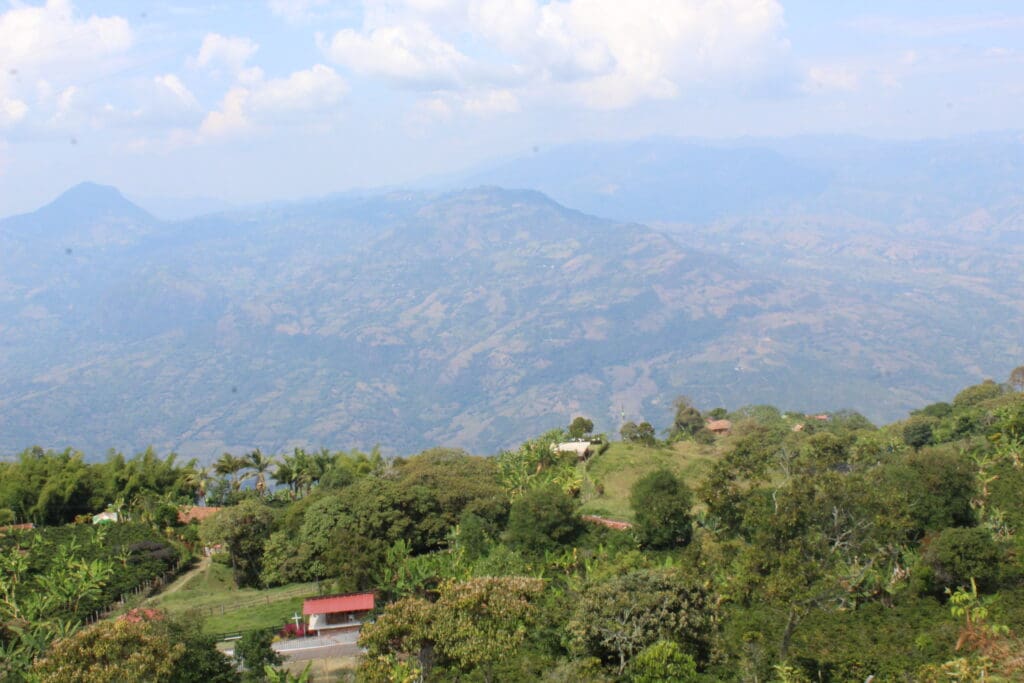
My bond with these mountains is guided by a contemplative gaze: a practice of slow attention, of listening and wonder. The poem below is born from that contemplation — from letting the mountain and its inhabitants move something deep within me, from recognizing in it my own roots and fragilities. It is a way of giving thanks, of grounding myself, and of remembering that we too are part of the cycles, the networks, and the complexity of life.
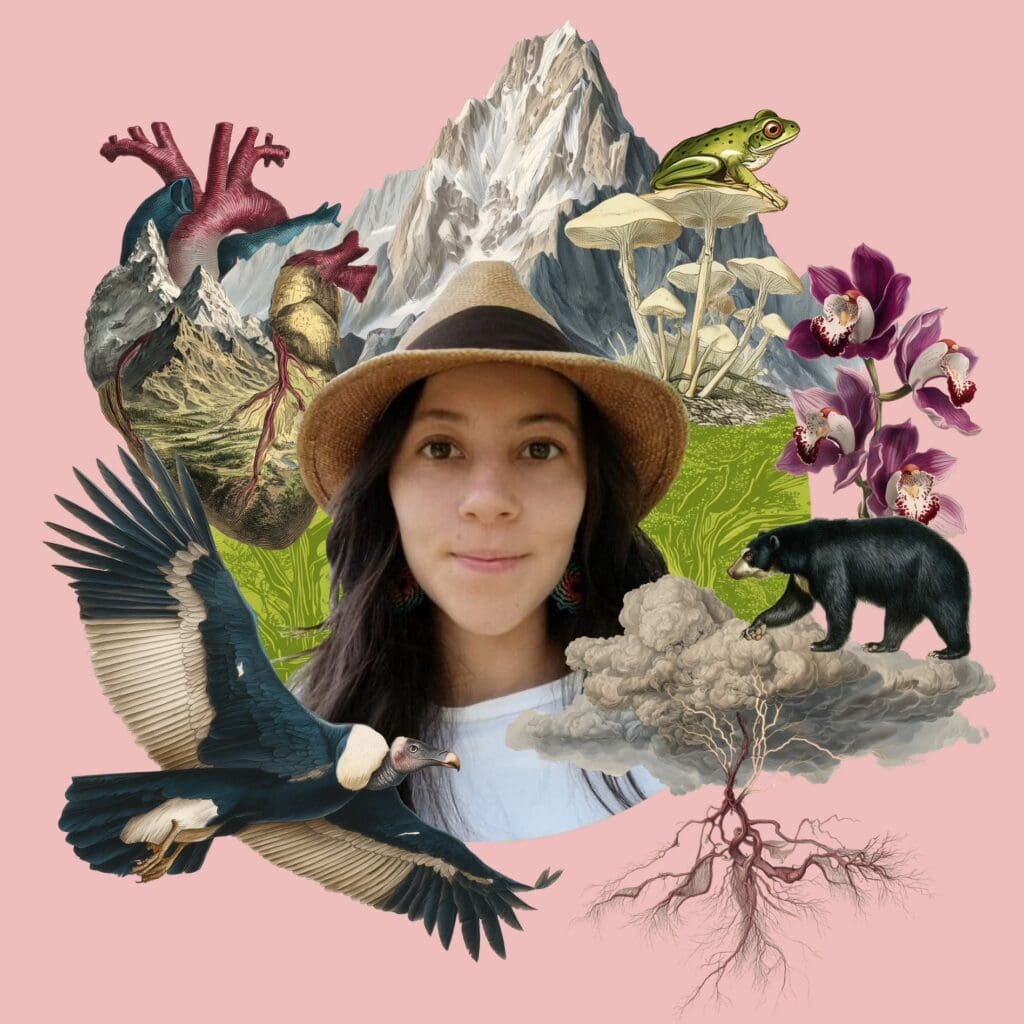
Poem: To inhabit the mountains of the Colombian Andes
To inhabit the mountains of the Colombian Andes
is to know that the earth holds firm,
ancient and steady, beneath your feet.
It is to listen to the mist
as it embraces the trees of the tropical rainforest,
letting silence speak as well.
It is to breathe in the perfume of orchids
and allow your breath to mingle
with that of the bees resting at their center,
as if breathing were a shared act.
It is to feel the pulse of roots
buried deep in rock and river,
a heartbeat you cannot see
but that sustains everything.
Here, human voices are interwoven
with the song of birds
and the laughter of frogs
who know the secrets of the night with ancestral precision.
A spectacled bear moves silently among frailejones.
An Andean condor writes circles in the sky,
unhurried,
following the memory of the wind,
indifferent to our rushing.
Every fungus holds archives of past rains.
Every whale carries an ancient message.
The mangroves, old and wise,
remind us that we are not the center,
but a current that passes through —
stardust of fleeting stars
in constant dialogue with moss and bacteria.
And in times of multiple and profound storms,
life insists on teaching us to collaborate.
The mycelium shows us
how to hold the fabric together from the invisible.
And so, animals, plants, fungi, microorganisms,
rocks, water, air, fire, and earth,
we make of this planetary adventure
a journey of living connections,
intimate
and unforgettable.
About the Author
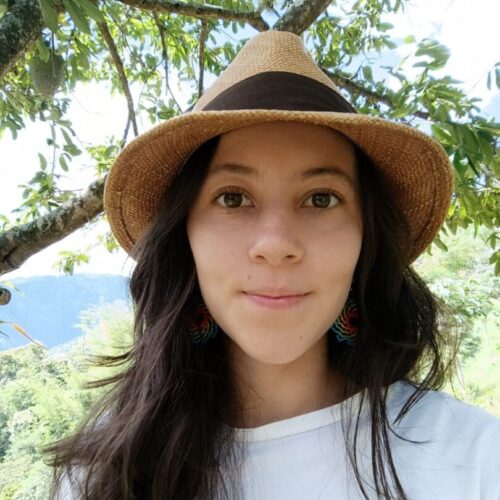
María Clara Botero Zapata is a Colombian biologist, farmer, and ecofeminist activist from Abejorral, Antioquia. Of rural origin, she is the founder of Semillero Raíces — a permaculture school for rural children and youth rooted in agroecology, territorial defense, and community-based learning guided by care, autonomy, and ancestral wisdom. She also founded El Maná Nature Reserve, an ecological sanctuary dedicated to biodiversity conservation and agroecological practice in the Antioquian highlands.
María Clara’s work weaves together scientific knowledge, popular education, and land-based resistance, understanding agroecology not merely as a technical practice but as a political and spiritual act — one that holds joy, interdependence, and the defense of life at its centre. Through her ORA project, she is cultivating a new generation of land stewards in regions threatened by mining and hydroelectric projects, uplifting the leadership of women and girls and nurturing a future grounded in respect, justice, and harmony with the Earth.
Follow her work at @semillero_raices_