
As a journalist, I was trained to see myself as the “author” of the stories I tell.
Of course, reporting relies on research and interviews. But ultimately, the journalist is the decider. We decide what to cover, how to cover it, and what the intended impact of our reporting will be.
In recent years, some of those assumptions have started to shift. Relatively new terms like community-centered reporting, trauma-informed journalism, and social justice journalism have emerged.
Many of these terms would have horrified many of my J-school professors. To them, the rules of journalism were sacrosanct:
- A journalist must enter every story with an open mind, free from biases and pre-conceived ideas.
- A journalist must explore – and give equal time – to all sides of an issue.
- A journalist must never pay a source for their story or allow them to influence how it is told.
Today, many journalists recognize the limitations of those rules. Journalists are people, and people have biases – whether we acknowledge them or not. And not every viewpoint deserves equal weight. As a human living on this planet, I cannot give climate change denial and scientific consensus equal time.
But as I’ve become more aware of the harm journalism has sometimes caused marginalized communities, I’ve started thinking most about the third rule. The one that says sources should not be paid for their stories or allowed to influence how they are told.
This rule exists for good reason. Journalists are tasked with holding powerful people accountable: politicians, corporate executives, judges, prosecutors, and the police. Maintaining editorial independence protects journalists from manipulation by people who already have significant influence over public narratives.
But there’s a growing movement among journalists that suggests that applying these same rules to marginalized communities, survivors of trauma and grassroots changemakers creates an inherent and harmful power imbalance. And that imbalance can have huge consequences.
If it bleeds, it leads. And as the lines between journalism and entertainment become increasingly blurred, more time is spent reporting doom and gloom stories that drive ratings, rather than progress and solution stories that drive change.
This means that for some communities, journalism has become an extractive force. Trauma is put on display for a voyeuristic audience. Journalists helicopter in, ask community members to relive painful experiences or expose themselves to backlash, and then helicopter out — without offering the community anything of value in return.
In response, some newsrooms have begun experimenting with community-centered reporting. In this model, journalists work with residents and local organizations to identify the issues that matter most to them. The goal is to ensure coverage reflects local priorities rather than assumptions made in newsrooms.
But some people have started asking a more fundamental question: What if communities didn’t just inform stories – what if they were invited to tell them?
This essay is one attempt to answer that question.

A Collaborative Experiment
At its core, ORA is a narrative project. The organization was founded on the belief that dominant public stories are overwhelmingly catastrophic and more hopeful narratives offer a clearer path to a more resilient future.
ORA fellow Isapi Rua described the stakes this way: “Many struggles are lost not because people lack strength, but because they lack their own narrative. When others tell your story, they also make decisions. They decide your destiny.”
That idea sits at the center of this project.
With ORA’s support, and in collaboration with ORA fellows in India, Africa and Latin America, we produced a podcast called What Takes Root. Rather than simply interviewing participants, we invited them to help shape their own stories, deciding what experiences to share and how their narratives should unfold.
Through that process, we developed a framework for what I call participant-led storytelling, built around three principles:
- Capacity building
- Shared editorial control
- Equitable exchange
The traditional rules of journalism still matter. Investigative reporting and accountability journalism depend on independence from the people being covered. But in narrative formats like podcasting, where the goal is often to understand rather than to expose, collaboration can sometimes be the more ethical approach.
Pre-Reporting: Capacity Building and Restoring Agency
The first step in participant-led storytelling begins with demystifying the process. This is something I try to do with every person I interview. Often, I’ll begin by explaining my goals to my subjects. I’ll say things like, “My goal is to encourage you to tell stories.” Or even, “I want to tell this story in your words, not mine.”
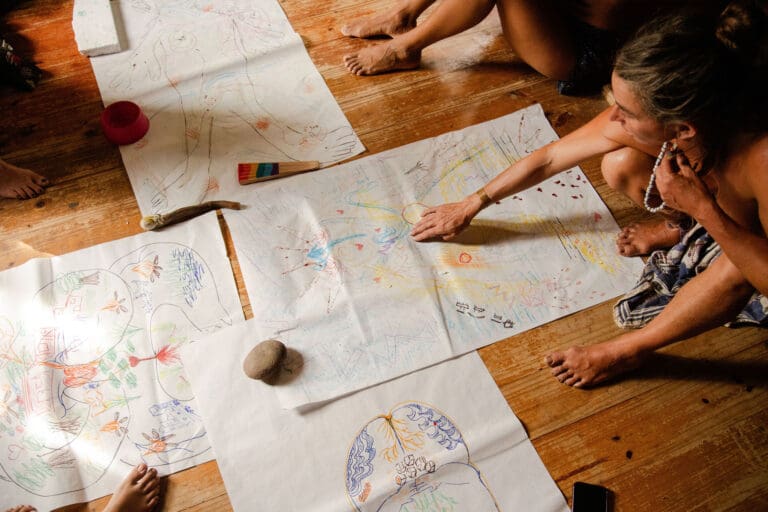
But for this project, we took that concept much further. We held two workshops, one in English and one in Spanish, to introduce ORA fellows to the fundamentals of narrative storytelling. The curriculum was similar to workshops I’ve taught for public radio newsrooms and podcast production teams. We discussed why narrative matters, how anecdotes drive stories, and how tension, turning points, and foreshadowing can be used to drive momentum and uncover the deeper meaning of a story.
The difference was the audience. Instead of training journalists, I was training the people whose stories we hoped to tell.
Some fellows questioned whether traditional narrative structures fit their experiences. They criticized the way some of the traditional styles of storytelling over-simplify complex narratives, and they questioned whether their personal stories were actually the stories they wanted to tell. Those conversations were a reminder that collaboration requires more than inviting participation. It requires a willingness to adapt.
But I was also trying to understand each fellow’s capacity to tell their own story.
As much as I wanted to keep my own biases out of this process, production budgets are always finite. I knew that I was not going to be able to produce an unlimited number of episodes. Difficult decisions were going to have to be made.
And as I always do when designing a podcast slate, I wanted to make sure the stories we told were diverse, informative and immersive. And I wanted to make sure to feature participants who would be strong storytellers, able to convey tension, emotion and meaning.
But I also challenged myself to push beyond my usual instincts. I wanted to explore stories that I might usually discount.
Many of the participants spoke English as a second (or third or even fourth) language, sometimes making their accents a bit difficult to understand. And others showed a great capacity for storytelling, but did not yet know what story they wanted to tell.
Normally, I’d move on to stories that were easier. After all, I am a journalist, and the cadence of my work is dictated by deadlines. But in this case, I embraced stories that are generally overlooked by the mainstream media. I took on those difficult accents. And I committed to helping participants figure out what story they most wanted to tell.
Some of the episodes that I was the most worried about ultimately became my favorites.
“Subject” vs “Participant”: Sharing Editorial Control
The second stage of the framework involves letting go of the reins.
In traditional journalism, the reporter maintains authority over the narrative. That independence is essential when reporting on powerful people and the institutions they represent.
But What Takes Root was not investigative reporting. The goal was not to expose wrongdoing. It was to help participants explore and share their own stories.
That meant that I began each participant with a simple question: What story do you want to tell?
At times, I suggested potential angles the participants hadn’t yet considered. And I tried to tease out anecdotes to help listeners connect to the story. But I saw my role as a collaborator, not an author. And I tried to keep reminding myself that this was not my story to tell.
In other words, I held space.
This required a significant shift in mindset. Journalists are trained to believe we know which details matter and which do not. Stepping back from that role can feel uncomfortable.
But it can also be deeply rewarding.
I am an expert in storytelling, but the participants were the experts in their own stories. And by allowing them to take control, their stories moved in directions I never could have predicted.
In truth, communication was one of the challenges of this project. Because of the collaborative approach, these episodes required quite a bit of back-and-forth with the participants. And that communication wasn’t always easy.
For one, we were communicating with people who live in places where internet outages are common. Some of them spend significant time working in rural communities where internet access is spotty, at best. Others are simply busy. We realized quite early on that we could not expect quick replies to our emails and WhatsApp messages.
There was also a significant language barrier with many of the participants. From the outset, we planned to conduct interviews with Spanish speaking participants in Spanish, and we had one of ORA’s amazing translators working on the project.
But after the initial “audition” calls, I realized that it was not possible for the Spanish-language episodes to be truly “participatory” unless the producer assigned to them could also speak Spanish. And I wanted the Spanish-speaking participants to have the same collaborative experience that the English-speaking participants were having.
That’s when Laura Gonzalez joined the project. Laura is a bilingual multimedia producer living in Los Angeles. She has significant experience training new journalists, as an adjunct professor at the Annenberg School of Journalism at USC and through NextGen Radio. Laura worked directly with the Spanish-speaking participants and was able to bring cultural depth to the project that I likely would have missed.
Once Laura and I had edited each interview down to an appropriate length, we sent each participant a rough draft of their episode and solicited feedback.
This is something I have never done before. In traditional journalism, sources are never allowed to review full drafts before publication. But in this model, feedback was essential. Participants were not just sources; they were collaborators.
Like any podcast project, we were on a schedule. So setting clear expectations was key. Participants were given a week to let us know if they wanted changes. All participants were given the option of recording a second interview to add missing context. Only a few of them took us up on that offer.
But by allowing for feedback from participants, the project shifted the traditional balance of power.
Equitable Exchange: “Exposure” is Not Enough
The final stage of the framework addressed a longstanding tension in journalism: what constitutes a fair exchange between storytellers and the people whose lives form the basis of those stories?
After all, there are a lot of reasons why journalists do not pay for interviews.
First and foremost, there is the concern that if a source has been paid, they have been incentivized to embellish – or even out and out lie – to ensure a payday.
Even if the source does not lie, there’s the worry that paying for an interview makes that interview less trustworthy in the eyes of the audience. People won’t believe the source’s story, because money has exchanged hands.
When sources ask to be paid, journalists are taught to deflect. And the most common deflection we use is to say that we can’t offer money, but we can offer “exposure.”
For an author peddling a new book or a chef who’s just opened up a new restaurant, exposure can be an appropriate exchange.
But it’s not an appropriate exchange in every situation.
In What Takes Root, participants had no reason to lie, and they were being asked to do a lot more than sit for a quick interview. I could not, in good conscience, tell them that I should get paid for my labor and that they should not get paid for theirs.
Initially, I budgeted funds to provide each participant with a podcast microphone and a stipend. Many of the participants had expressed interest in starting their own podcasts, and owning their own microphone felt like a solid first step. But I quickly realized that buying a microphone in the US and shipping it to the Global South was prohibitively expensive. Participants could get a better deal if they purchased locally.
Beyond that, not every participant had the same needs. Some were exclusively producing videos, which use different microphones than are used for audio. Some already owned a perfectly good podcast microphone. And others had no need for one at all, making the purchase a benefit to me – but not a benefit to them.
So, we changed the plan. Participants were sent the cash value of the microphone along with their stipend. Those who wanted to buy their own equipment received guidance on purchasing it locally, and the rest were advised on how to record the best possible sound with equipment they already owned.
One more note on equitable exchanges.
We had planned to release nine episodes, six of which would be recorded in English. The remaining three would be recorded in Spanish and released with an English voiceover. But that meant that the episodes that originated in Spanish would only be accessible by an English-speaking audience.
That clearly made no sense, and so we quickly revised our schedule to allow for those three episodes to be released in both languages.
Conclusion
Participant-led storytelling is not about abandoning the principles of journalism. It is about recognizing that those principles were designed for specific contexts and do not apply equally in every situation.
The approach we experimented with in What Takes Root required more time, more communication, and a greater willingness to relinquish control than traditional reporting.
But it also produced stories that felt more honest, more textured, and more accountable to the people at their center. When participants are given the tools, the space, and the authority to shape their own narratives, the resulting stories do not lose rigor. Instead, they gain depth.
Journalists still have an essential role to play. Our skills in storytelling remain critical. But in this model, those skills are used to support the people whose stories are being told.
At a moment when trust in journalism remains fragile, participant-led storytelling offers one possible path forward. It asks us to move beyond extraction and toward collaboration. And it imagines a world in which we’re not just telling stories about communities, but helping create the conditions for communities to tell stories for themselves.
Listen in to What Takes Root and other ORA-produced podcasts.
About the Author
Karen Given is an award-winning podcast writer, producer, story editor, and coach. A veteran of public radio, she spent more than 20 years at WBUR and NPR’s Only A Game, where she rose from technical director to executive producer and interim host, earning two national Edward R. Murrow Awards. Today, she teaches narrative storytelling, leads ORA’s storytelling workshops, and produces What Takes Root, a podcast amplifying the voices of community-based changemakers across the Global South.